Posts
Posts


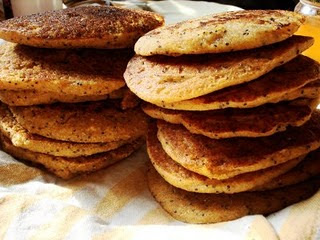
Lemon-Poppy-Seed Cornmeal Pancakes (and a Googled education in corn)
>> Thursday, February 26

 (Dani's, smothered in Quince Jam. That boy knows how to eat a pancake.)
I bet they’re better than your mama made ‘em.
Ok, mine never made cornmeal pancakes, which is shocking given the amount of cornmeal gluten-free cooks use, so go figure. It’s just that, these seem so very homey, simple, and country that I am really surprised I’ve never had them. Right now I’m equally surprised I’ve already had so many of them. Making up for lost time, that’s it…
Yesterday, slicing into a slab of cooled polenta on Daniel’s counter for breakfast, I got to wondering, “If I’ll eat a slimy-ish round of cold polenta with jam on it, why am I not just eating pancakes.” Yeah, it seemed unfair to me too.
The first and best recipe for “cornmeal pancakes” I found was from Natalie at Gluten-Free Mommy. The picture, especially, sold me, because while Natalie’s pancakes are totally gorgeous and glowing with fresh buttery-looking yumminess, mine are always rubbery and flat-nothing like the fluffy, crisp-edged wonders of my mom’s breakfast table. I adapted the recipe to be vegan and satisfied an urge for a bit of zing by adding fresh lemon juice, zest, and poppy seeds.

Everyone was ecstatic about the result, and I have to admit, I was fairly proud to have pulled off praise-worthy gluten-free pancakes. If I had known it was so simple, I could have pretended nonchalance and been wielding my magic creations over all you rubber-caked peons out there…so much for grandeur. I can suck it up and be the newbie for now-I had NO idea this was possible, and they are SO good.
In the process of creating my version of the recipe, I looked up a lot of information on corn. Apparently, that is one flexible little kernel-from white to yellow to blue, it can be starch-ed, stone-ground, meal-ed, flour-ed, mashed, boiled, pounded, or…nixtamalized…? Yeah, I said it, Nixtamalized. I bet you had no idea either. check out the “little blip about corn” at the end of the recipe to find out more...

Lemon-Poppy-Seed Cornmeal Pancakes
Ingredients (I had a hard time restraining myself and used an extra half of everything…apologies for the frequent “one-and-one-half-tablespoons” thing, but it worked out great):
- 2 cups medium cornmeal (or fine polenta, for europeans)
- ¼ cup rice or buckwheat flour (I used roasted red rice flour)
- 1 TBSP baking powder
- 1½ TBSP poppy seeds
- ½ tsp salt
- 1½ TBSP raw sugar
- ¼ tsp xanthan/guar gum
- egg replacer for 1 egg (or 1½ tbsp flax meal soaked in hot water for 10 minutes)
- zest of 1 lemon
- juice of 1 lemon…well, I used 1½ in the end
- 1¾ cups dairy-free milk and/or yogurt (I used soy with a little soy yogurt stirred in to make it “buttermilky”)
- ¼ cup canola oil
Directions:
- (Preheat the oven to the lowest setting for keeping your pancakes warm.)
- In alarge bowl, whisk together the cornmeal, flour, xanthan/guar, sugar, salt, baking powder, and poppy seeds (and powdered egg replacer if using).
- In another bowl, whisk together the oil, lemon juice, lemon zest, and flax seed egg sub, if you’re using it.
- Stir in the milk slowly, hoping it doesn’t curdle. Mine didn’t, but the possibility seemed to exist…
- Mix everything together and add a splash of water if it’s too thick.
- Heat a griddle or pan over medium heat, lightly oiled, and pour out ¼ to 1/3 cups of batter for each cake. My batter was thick, and I tilted the pan a little to spread it out more, which worked great.
- Cook until lightly browned on the bottom and firm enough to flip, them brown the other side and let rest in the oven until they’re all done!
A Little Blip About Corn
Corn can be prepared in all sorts of interesting ways which alter its nutritional value, form, taste, and texture. Sure, there’s popcorn, corn meal, corn starch, corn flour, corn oil (that’s a bit strange, if you ask me…where exactly is the oil in a corn plant…?), corn syrup (another conundrum), etc. But then there are some really interesting things that only the mothers of corn-eating could have devised, like chicha, a fermented Incan drink traditionally made by old women sitting around chewing on the corn and then spitting it into warm water.
What got me wondering about corn was the bag of Masa Harina my roommate purchased to make corn tortillas a while ago. The corn flour in it has such a fine, white appearance and a strange, almost play-dough consistency when mixed with water. It’s nothing like fine polenta, or cornmeal, or corn starch, or…anything I’ve ever seen. I looked it up and sure enough it’s something else. It is the dried version of something I read about in Wild Fermentation and then promptly forgot: nixtamalized corn.
To nixtamalize corn, South and Central Americans traditionally cooked dried corn in lime (calcium hydroxide, not the fruit!). North American Indians used wood ash, but both are alkaline solutions, and the process makes niacin, among other nutrients, more available in the corn. This was crucial to the ancient cultures that depended on corn as a staple food. When settlers adopted a diet high in corn, and brought it back to Europe and other colonies, they left out the nixtamalization and got extremely sick because they weren’t getting everything they needed. Imperialism never pays off in the long run.
Masa Harina is, as I said, the dried version of nixtamalized corn, or “Nixtamal”. It’s not only way more nutritious that corn meal, but the special ingredient needed to make tamales, corn tortillas, and a variety of cool porridges and beverages. It’s also probably the reason that my “masa harina corn dumplings” came out more like mochi (sticky sweet rice) balls the other night. It is not a substitute for cornmeal, and corn meal is not a substitute for it, at least, never in entirety. Good to know!
Nixtamalized is also a really weird word, and a good one for impressing people, especially if you’re out drinking together. Just bust out with a, “Whatever dude, it’s all due to the decline of corn nixtamalization in the last 2 to 3 centuries-if corn production had never met western industrialization, we’d all be living off corn and beans; we’d be way healthier and gluten allergies might not even exist in the Americas today!” Ok, I have no basis for that claim, but it’s just a little food for thought.
Expect some masa harina recipes in the next few weeks, I am dying to try out some of the things I’ve been reading about. In the meantime, check out some of these websites, it’s really interesting!
a GREAT nutritional guide to gluten-free grains from About.com
Nutritional information for Masa Harina and cornmeal, to compare.
Info on Nixtamalization Read more...